Lower KS2 Music Curriculum Map (Years 3–4)

How Kidstrument’s Year 3 and Year 4 routes meet the Lower KS2 music curriculum: jazz and Rock and Roll year projects with vocal warm-ups, dance, Rhythmic Pyramid, Weekly Drum Routine, Rainbow Dots, stave reading, chords, time signatures, dynamics, listening, desk drumming and ukulele across the year.

What Lower KS2 music covers in Kidstrument

For Key Stage 2, the music programme of study says pupils should be able to:

  • Play and perform in solo and ensemble contexts, using their voices and instruments with increasing accuracy, fluency, control and expression.
  • Improvise and compose music for a range of purposes using the interrelated dimensions of music.
  • Listen with attention to detail and recall sounds with increasing aural memory.
  • Use and understand staff and other musical notations.
  • Appreciate and understand a wide range of high-quality live and recorded music from different traditions and great musicians.
  • Develop an understanding of the history of music.

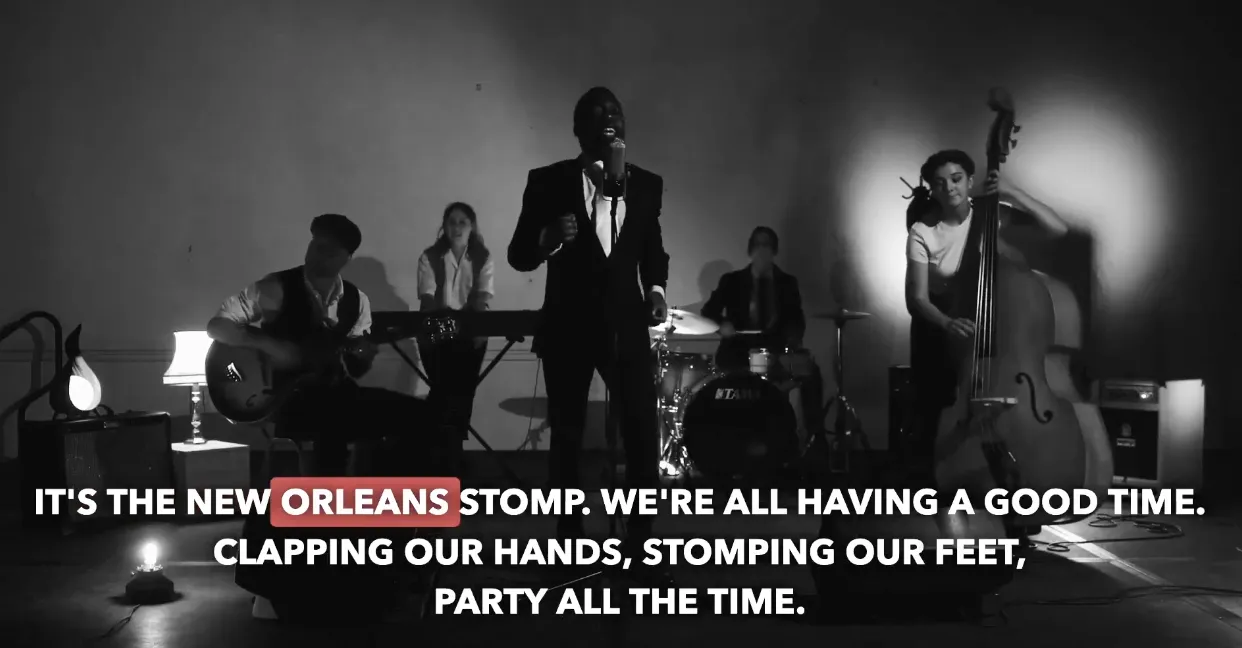
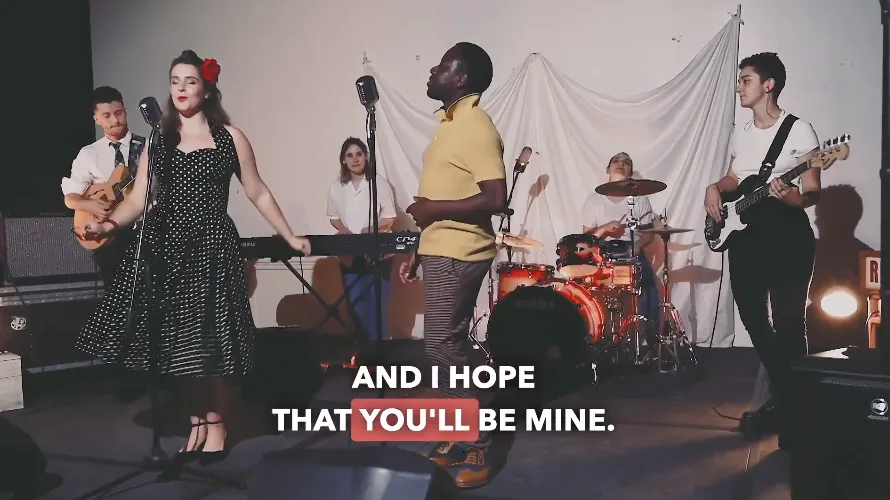
Kidstrument’s Lower KS2 route is designed so that Year 3 (jazz) and Year 4 (Rock and Roll) together secure these expectations at an appropriate level. Year 3 spends the year in a 1920s jazz and swing sound world built around New Orleans Stomp. Year 4 moves to a 1950s Rock and Roll project built around I Love You So.

In both years, each term gives you six carefully sequenced sessions (18 per year). Lessons are made from around nine short activities: vocal warm-ups, dance, pulse and rhythm work, notation and chord tasks, listening games, featured songs, instrumental work (desk drumming and ukulele) and quick retrieval or vocabulary extensions.

Lower KS2 music overview illustration showing jazz and Rock and Roll routes
Each Lower KS2 year has 18 sessions over 3 terms, with jazz in Year 3 and Rock and Roll in Year 4.

Weekly lessons or shorter β€œbursts”

Across the school, Kidstrument sessions can be delivered as:

  • Traditional lessons (for example, one 30–45 minute slot per week), or
  • De-linearised β€œbursts” across the timetable β€” a song before registration, a listening game after break, a short movement or vocabulary task later in the day.

Because the curriculum is built from small, focused activities, it adapts to the reality of primary timetables while still giving you a coherent, inspectable learning journey in Lower KS2.

Year 3 and Year 4 at a glance

The summaries below show what’s happening in the background when your Year 3 and Year 4 classes follow the Kidstrument sequence you’ve mapped into your grid.

Year 3 – 1920s jazz and swing project

Year 3 is built around New Orleans jazz and swing. Across Autumn, Spring and Summer terms, pupils:

  • Use Vocal Warm Up 1–5, Dance: Jazz 1–4 and the class track New Orleans Stomp (Watch Song, Perform Song, Music Video and Karaoke versions) to build confident, expressive singing and movement in a jazz style.
  • Develop pulse and rhythm through Rhythmic Pyramid: Pulse, Weekly Drum Routine 1–2 and Copy Cat – Blues/Jazz, using the desk as a drum kit and echo/answer phrases to feel swing and groove.
  • Learn about jazz history and instruments with clips such as What is Jazz?, Who is Louis Armstrong?, Who is King Oliver?, Who is Sydney Bechet?, Who is Fats Waller?, Who is Josephine Baker? and Who is James P Johnson?, plus Guitar/Bass/Keyboard/Drums/Vocals in Jazz.
  • Build notation and chord understanding with What is a Stave?, What are Barlines?, What are Clefs?, Sight Reading (stave, treble clef, notes C–E), Long and Short Notes – C and D, Harmony: What is a Chord? and Quickfire Chords variations.
  • Strengthen listening and ensemble awareness through Skies and Valleys, Music Detective: Jazz and Critical Listening: New Orleans Jazz, plus optional Ukulele Course sessions to meet the KS2 tuned-instrument expectation.
View Year 3 curriculum map
Year 3 jazz curriculum overview
Year 3: 1920s jazz and swing with New Orleans Stomp.

Year 4 – 1950s Rock and Roll project

Year 4 keeps the same familiar warm-up / move / listen / read / perform pattern, but switches the context to 1950s Rock and Roll and deepens notation, time signatures and dynamics. Across the year, pupils:

  • Use Vocal Warm Up 1–5, Dance: Rock and Roll 1–4 and the class track I Love You So (Watch: Rock and Roll Music Video, Perform, Karaoke) to perform in a Rock and Roll style with confidence and stage presence.
  • Develop pulse, rhythm and control through Skies and Valleys 4–6, Weekly Drum Routine 3–4 and Musical Morse Code Level 1, encoding and decoding rhythms in different time signatures.
  • Explore Rock and Roll concepts and history with What is Rock and Roll?, time signature and back-beat clips (Pulse vs Rhythm, How to Feel Time Signatures, What is On-Beat / Back-Beat?), plus Who is Wanda Jackson?, Etta James, Elvis Presley, Buddy Holly and Little Richard.
  • Extend notation and harmony through Rainbow Dots 4 (exercise), Rainbow Dots 5 (Parts 1–3), What Are Barlines?, What is a Time Signature?, How to Feel Time Signatures and Quickfire Chords 4–6.
  • Deepen dynamics, listening and ensemble work using Roars and Whispers: Dynamics, Shape Shifters, Dynamic Markings, Simon Says, Music Detective: Rock and Roll and Critical Listening: Rock N Roll, alongside flexible Ukulele Course sessions.
View Year 4 curriculum map
Year 4 Rock and Roll curriculum overview
Year 4: 1950s Rock and Roll with I Love You So.

How Lower KS2 Kidstrument maps to the National Curriculum

The rows below show how your mapped Year 3 and Year 4 activities combine to cover the Key Stage 2 music aims at Lower KS2 level.

Play and perform in solo and ensemble contexts, using their voices and playing musical instruments with increasing accuracy, fluency, control and expression (Lower KS2 focus)
In both Year 3 and Year 4, pupils sing and move every term and use the desk (and, where chosen, ukuleles) to rehearse simple band-style parts. Performances move from supported β€œwatch and copy” to more independent karaoke, with children increasingly aware of timing, balance and expression.
Key activity families: Vocal Warm Up 1–5; Watch / Perform / Karaoke versions of New Orleans Stomp and I Love You So; Dance: Jazz; Dance: Rock and Roll; Weekly Drum Routine 1–4 (desk drum kit); call-and-response games such as Copy Cat – Blues/Jazz; optional Ukulele Course sessions. These combine to give regular solo and ensemble opportunities using both voice and instruments.
Improvise and compose music for a range of purposes using the interrelated dimensions of music (Lower KS2 focus)
Improvisation and composition at Lower KS2 are small and practical: pupils adapt rhythm and pitch patterns, invent answers to musical β€œquestions” and experiment with dynamics and tempo within clear jazz and Rock and Roll structures.
Key activity families: Copy Cat – Blues/Jazz (creating new responses using swing rhythms); Rhythmic Pyramid and Weekly Drum Routine variations where pupils create their own bar patterns; Musical Morse Code Level 1 β€œsecret messages” and responses; Skies and Valleys for designing pitch contours; Quickfire Chords and Harmony: What is a Chord? as a foundation for simple chord-choice work; small-group arrangements of desk-drumming or ukulele parts under the project songs. The interrelated dimensions (duration, pitch, dynamics, tempo, texture and timbre) are always present but introduced in manageable steps.
Listen with attention to detail and recall sounds with increasing aural memory (Lower KS2 focus)
Lower KS2 lessons constantly ask pupils to notice, copy and remember musical ideas. They echo rhythms and melodies, spot changes within tracks and recall features of jazz and Rock and Roll recordings across a term.
Key activity families: Music Detective: Jazz / Rock and Roll; Critical Listening: New Orleans Jazz and Critical Listening: Rock N Roll; Skies and Valleys 1–6; Musical Morse Code Level 1 (encoding/decoding at speed); Rhythmic Pyramid and Weekly Drum Routine exercises where pupils must remember multi-step patterns; repeated encounters with New Orleans Stomp and I Love You So so riffs, grooves and structures become familiar and recallable.
Use and understand staff and other musical notations (Lower KS2 focus)
Staff notation is introduced clearly in Year 3 and revisited in Year 4 so pupils learn what the stave, clefs, barlines, time signatures, note values and simple chords look like – and how these symbols link to the music they are performing.
Key activity families: What is a Stave?, What are Barlines?, What are Clefs?, What is a Time Signature?, How to Feel Time Signatures?, Dynamic Markings; Sight Reading (stave, treble clef, notes C–E); Rainbow Dots 4–5 (parts 1–3); Long and Short Notes – C and D; Harmony: What is a Chord? and Quickfire Chords variations 1–6; plus written follow-up options in Workbooks and Professor Duncan music theory clips.
Appreciate and understand a wide range of high-quality live and recorded music drawn from different traditions and from great composers and musicians (Lower KS2 focus)
Within Lower KS2, pupils explore two historically important styles in depth: New Orleans jazz and 1950s Rock and Roll. They hear these styles through high-quality recordings, artist focus clips and the class songs, starting to recognise how different traditions use rhythm sections, melody and harmony.
Key activity families: Critical Listening and Music Detective tasks in jazz and Rock and Roll; style overview clips such as What is Jazz? and What is Rock and Roll?; instrument-role clips (Guitar/Bass/Keyboard/Drums/Vocals in Jazz and Rock and Roll); artist-focus clips on Louis Armstrong, King Oliver, Sydney Bechet, Fats Waller, Josephine Baker, James P Johnson, Wanda Jackson, Etta James, Elvis Presley, Buddy Holly and Little Richard. These lay the groundwork for the broader stylistic range covered across the full KS2 journey.
Develop an understanding of the history of music (Lower KS2 focus)
Lower KS2 makes it clear that jazz and Rock and Roll are from different times and places. Pupils learn that 1920s New Orleans jazz and 1950s Rock and Roll sit at different points on a musical timeline and that each style has key figures, instruments and venues.
Key activity families: What is Jazz? and New Orleans artist clips; What is Rock and Roll? and 1950s artist clips; instrument and band-role videos that show how ensembles changed between the 1920s and 1950s; retrieval tasks (for example in Find the Words and relevant Workbooks) that revisit style names, periods and key musicians. The move from Year 3 jazz to Year 4 Rock and Roll gives a clear, age-appropriate bridge into talking about music changing over time.
Key Lower KS2 activity types and what they build

Most Lower KS2 lessons mix several of these activity types. Over Years 3 and 4, pupils repeatedly meet the same formats in new musical contexts so skills can deepen without the interface constantly changing.

New Orleans Stomp, I Love You So & dance units

Singing, style, structure and performance confidence.

The Year 3 jazz song New Orleans Stomp and the Year 4 Rock and Roll song I Love You So run through every term: first as watch-and-listen tasks, then class performances and finally karaoke versions. Dance: Jazz and Dance: Rock and Roll turn pulse and phrase shape into movement. Together, these build secure song knowledge, stylistic awareness, ensemble confidence and readiness for sharable performances.

Rhythmic Pyramid, Weekly Drum Routine & Musical Morse Code

Pulse, subdivision, coordination and groove.

Rhythmic Pyramid: Pulse and Weekly Drum Routine 1–4 use the desk as a drum kit so every pupil can practise keeping time and coordinating left/right hands. Musical Morse Code introduces simple rhythm codes that link to the time signature and barline work. These routines give Lower KS2 a strong rhythmic spine that supports singing, ukulele and later band work.

Sight Reading, Rainbow Dots 4–5 & Quickfire Chords

Reading the stave, understanding time signatures and hearing chords.

Year 3 focuses on stave basics (lines, spaces, clefs, notes C–E) and introduces chords through Quickfire Chords. Year 4 extends this with Rainbow Dots 4–5, barlines, time signatures and more advanced chord challenges. Across both years, pupils see how the patterns on the page match the riffs, melodies and chord progressions they hear in jazz and Rock and Roll.

Music Detective, Critical Listening & artist focus clips

Focused listening, aural memory and style knowledge.

Music Detective: Jazz / Rock and Roll and Critical Listening tasks invite pupils to spot missing instruments, changes in texture, dynamics and structure. Short β€œWho is…?” clips and instrument-role videos build a clear picture of how jazz bands and Rock and Roll rhythm sections work. Pupils learn to talk about what they hear using precise musical language.

Find the Words, Match & Workbooks

Vocabulary, literacy links and written evidence.

Find the Words (KS2), Match and Order activities, and printable workbooks / Professor Duncan clips give quick retrieval practice for pitch, rhythm, tempo, dynamics, instruments, symbols and time signatures. You can use them as starters, plenaries, cover lessons or independent tasks to capture understanding for subject review or inspection.

Ukulele Course & rhythm section focus

Tuned-instrument technique and playing in a band.

The flexible Ukulele Course lets you thread short instrumental lessons alongside the jazz and Rock and Roll projects. Pupils learn how to hold the ukulele, name the strings, pluck and strum, read chord diagrams and play chords C, Am, F and G. Rhythm-section clips (Drums/Bass/Guitar/Keyboard/Vocals in Jazz and Rock and Roll) show how these parts fit together, so pupils start to think like members of a band, not just solo performers.

Where to go next in the Lower KS2 curriculum

This Lower KS2 map shows the big picture. For a closer look at exactly what happens in each session, use the Year 3 and Year 4 pages below.

Year 3 detailed map

See how the Autumn, Spring and Summer sessions combine vocal warm-ups, jazz dance, Rhythmic Pyramid, Weekly Drum Routine, sight-reading, chords and jazz history around the class track New Orleans Stomp.

Open Year 3 music map

Year 4 detailed map

Explore the term-by-term Rock and Roll route, including vocal warm-ups, Rock and Roll dance, Rainbow Dots 4–5, Rhythmic Pyramid, Musical Morse Code, Weekly Drum Routine, dynamics games, Rock and Roll listening and optional ukulele work around I Love You So.

Open Year 4 music map
From Β£199 β€” bring the full Lower KS2 music curriculum (Years 3–4) to your whole school.