
Weekly lessons or shorter “bursts”
Across the school, Kidstrument sessions can be delivered as:
- Traditional lessons (for example, one 30–45 minute slot per week), or
- De-linearised “bursts” across the timetable — a song before registration, a listening game after break, a short movement or vocabulary task later in the day.
Because the curriculum is built from small, focused activities, it adapts to the reality of primary timetables while still giving you a coherent learning journey to show inspectors.
How Year 2 music is structured (Blues focus)
In Kidstrument, Year 2 music is taught through three terms of six sessions (18 in total), just like Year 1. The difference is that pupils spend the whole year in one sound world: Blues.
Each Year 2 lesson typically uses around eight short, classroom-ready activities. Instead of one long task, pupils move through quick, focused segments that return to the same core skills again and again: warming up, listening, pulse and rhythm, notation, performance and composition.
Across Autumn, Spring and Summer, most sessions include:
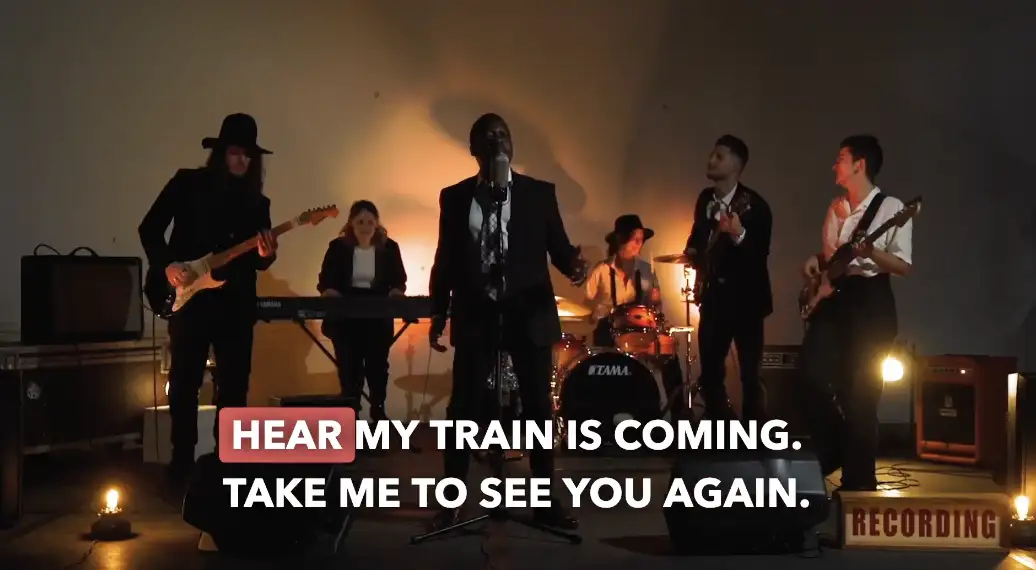
- Vocal warm-ups and Blues songs – using Vocal Warm Up and graded Vocal Warm Up Songs , plus the class track Hear My Train Is Coming, which becomes the anchor song for the year.
- Blues concepts, band and artists – short “Learn” clips on What is Blues Music?, What is a chord?, What are dynamics?, Band definition, Piano in Blues, and Blues artists such as Ma Rainey and Robert Johnson.
- Games and ear-training – including Skies and Valleys , Musical Detective and rhythm-focused tasks like Rhythmic Pyramid and Rhythm Clapping.
- Notation and pitch work – through Musical Rainbow (Notes C, D, E), Rainbow Dots 1–3 and rhythm levels drawn from Read That Rhythm .
- Performance and composition – singing and moving to Hear My Train Is Coming, Blues Dance, Weekly Drum Routine , Blues karaoke and finally Create your own Lyrics Blues.
Year 2 sits alongside the Year 1 curriculum to give a complete KS1 music offer: a classical-focused year followed by a Blues-focused year, together meeting the National Curriculum requirements for music.
What happens across the 18 Year 2 music sessions?
This overview is designed for headteachers, music leads and subject leaders who want to see the big picture of the Year 2 music curriculum. It summarises how often each strand is revisited and how it develops from Autumn to Summer, so it’s clear how pupils make progress through the Blues year.
Each of the 18 sessions blends around eight short activities drawn from a wider bank (for example, vocal warm-ups, games, notation tasks and performance). The activity types stay familiar so lessons are easy to run, while the Blues content, artists and notation work gradually step up in challenge.
-
Vocal warm-ups, song bank & Hear My Train Is Coming
Every lesson starts and ends in the Blues sound world.
Across all 18 sessions, pupils regularly meet:
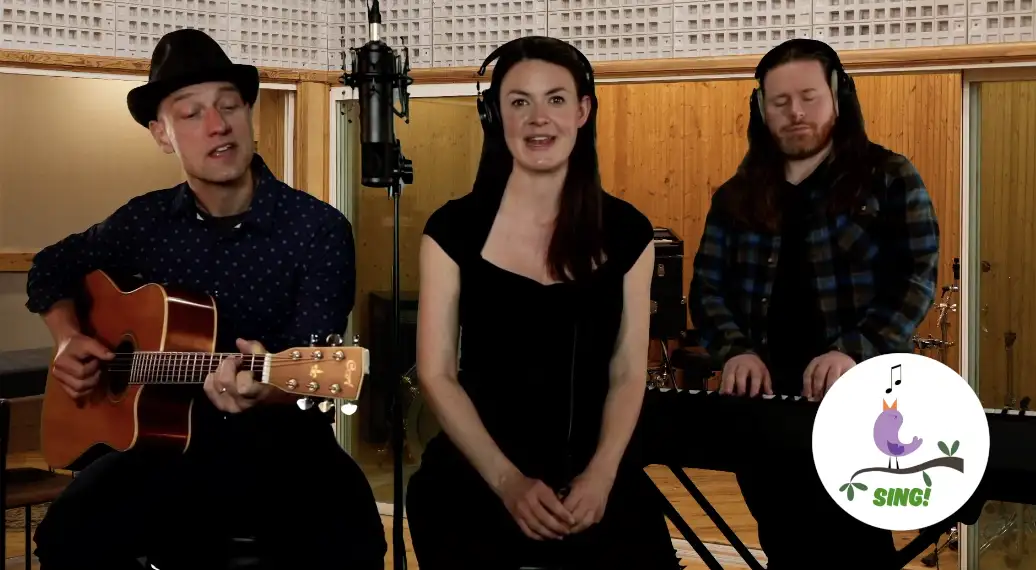
- Perform: Vocal Warm Up (1, 2 and 3) with graded Vocal Warm Up Songs 1–4, revisited in Autumn, Spring and Summer.
- The class track Perform: Hear My Train Is Coming as the performance song for the Blues year.
- Related performance tasks such as Blues Dance, Blues Karaoke and “Create your own Lyrics Blues” that all use the same musical world.
By the end of Year 2, pupils have sung and moved to Hear My Train Is Coming many times, so they know the groove, structure and feel of Blues from the inside.
-
Blues concepts, band skills & artists
Understanding what makes Blues sound like Blues.
Short “Learn” segments in different sessions cover:
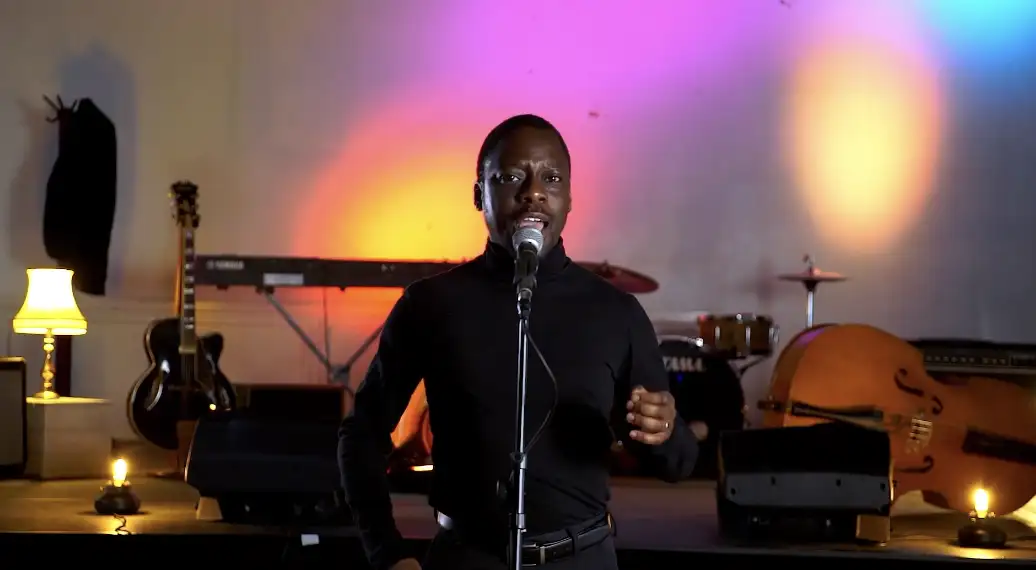
- What is Blues Music? and Piano in Blues – where the style comes from and the role of key instruments.
- What is a chord?, What are dynamics? and Pulse definition – linking to national curriculum language on pulse, dynamics and harmony.
- Band Definition, Blues Drums and Bass in Blues – who does what in a band and how parts fit together.
- Blues Artist Ma Rainey, Chicago Blues and Blues Artist Robert Johnson – putting real names and stories to the music children are performing.
These clips are spread across Autumn, Spring and Summer so that knowledge about Blues, bands and artists is built up a little at a time rather than in a single “topic week”.
-
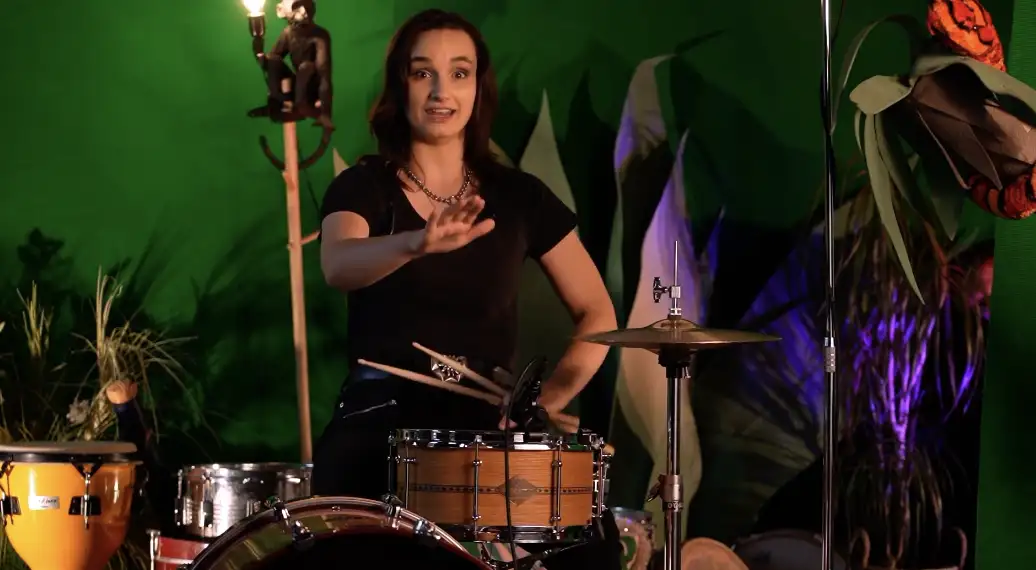
Pulse, rhythm & Weekly Drum Routine
Keeping the groove steady, on the desk and in the body.
Every session features some form of beat or rhythm work, for example:
- Game: Skies and Valleys – hearing higher/lower patterns and following pitch movement.
- Find the Pulse 3, Rhythmic Pyramid and Rhythm Clapping – clapping and moving in time with the Blues track.
- Weekly Drum Routine – using the desk as a drum kit to practise coordination and timekeeping.
Over the 18 sessions, this strand steadily shifts pupils from simply following the beat to feeling the groove like a band member: starting together, staying in time and ending together.
-
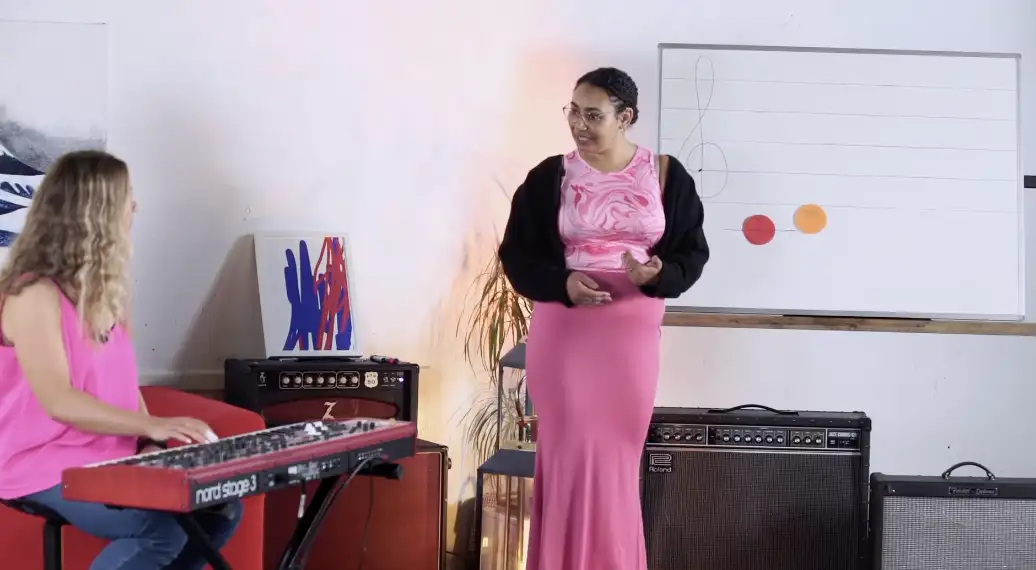
Musical Rainbow, Rainbow Dots & rhythm reading
Joining stave notation to real Blues songs.
Year 2 continues the notation journey with a clear, progressive sequence:
- Musical Rainbow (Note C) in Autumn, then Musical Rainbow Notes D and E in later terms – placing pitches on the stave in a Blues context.
- Rainbow Dots, Rainbow Dots 2 and 3 – placing and following C, D and E on the stave in short patterns.
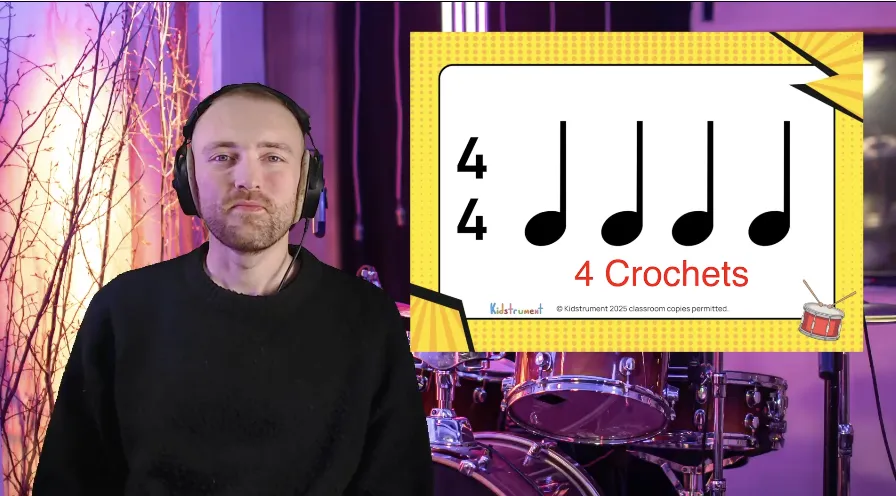
- Rhythms 3 and 4 – rhythm levels linked to Read That Rhythm and Learn Rhythm (Supermarket) .
Because these appear throughout Autumn, Spring and Summer, pupils see and use notation many times, not just in a single “theory lesson”, and can connect what they read to the Blues songs they perform.
-
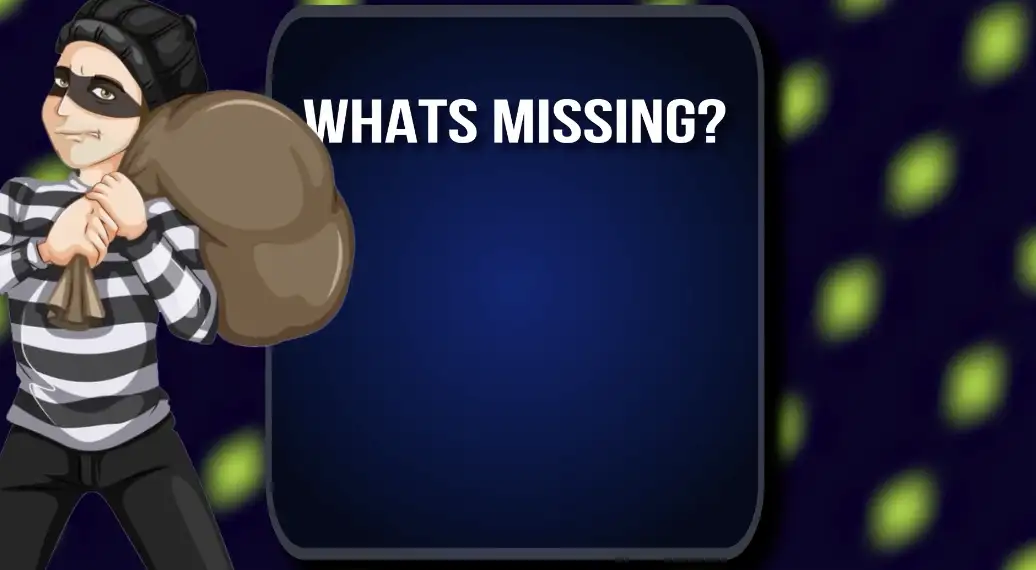
Listening games, Blues karaoke & lyric-writing
From spotting missing parts to creating their own Blues.
Throughout Year 2, listening and creativity are woven into the strands:
- Game: Musical Detective and related tasks – spotting which instrument or part is missing from a performance.
- Performance Time: Blues Karaoke – singing over full backing tracks, building confidence to take short solo or small-group lines.
- The Minor Pentatonic Scale and Pentatonic in Blues Vocals – giving pupils “safe notes” to use when improvising and writing lyrics.
- Create your own Lyrics Blues – a strand revisited across Summer, where children shape and refine simple Blues lyrics to perform with the class track.
By the end of the year, pupils can not only recognise Blues and perform it, but also contribute their own words and musical ideas inside a familiar structure.
Across the 18 sessions, a typical Year 2 Blues lesson uses around
eight short activities in this kind of order:
1) Perform: Vocal Warm Up
2) Sing: a Vocal Warm Up Song (1–4)
3) Learn: short Blues concept / band / artist focus
4) Game: Skies and Valleys or Musical Detective
5) Perform: Pulse / rhythm or Weekly Drum Routine
6) Learn/Practise: Musical Rainbow, Rainbow Dots or a Rhythms challenge
7) Perform: Hear My Train Is Coming, Blues Dance or Blues Karaoke
8) Create or recap: lyric-writing, vocabulary or quick retrieval task.
Individual sessions may swap one slot for a booster (for example a Find the Words pack), but overall
this gives a clearly sequenced, inspectable pathway through singing, listening, notation, rhythm and
Blues composition at KS1.
Extra KS1 tools available to Year 2
These KS1 music activities are not tied to a single session in the map. They are available throughout the year as quick, repeatable tasks you can drop into Blues lessons, assemblies or short “bursts” of music time to support the Year 2 music curriculum.
-
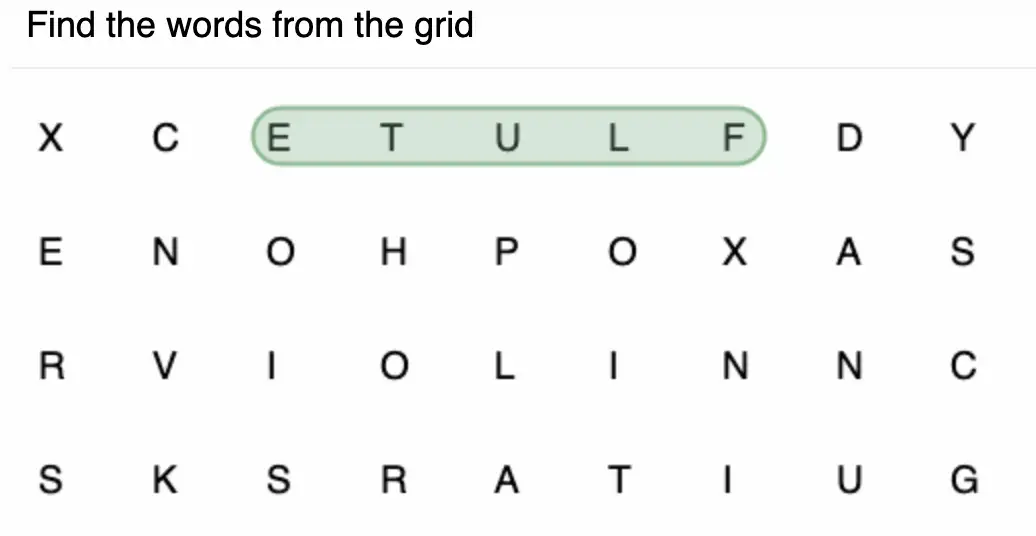
Find the Words KS1
Wordsearch-style tasks for musical vocabulary.
Packs such as Class Instruments, Body Percussion, Band Instruments, Mood Words, Timbre, Tempo, Structure, Pitch, Duration and Dynamics are all variations of Find the Words. You can use them:
- As a starter or plenary to revisit vocabulary from a Blues lesson.
- As a calm, focused task in a busy day.
- To support reading, spelling and recall of key musical words.
-
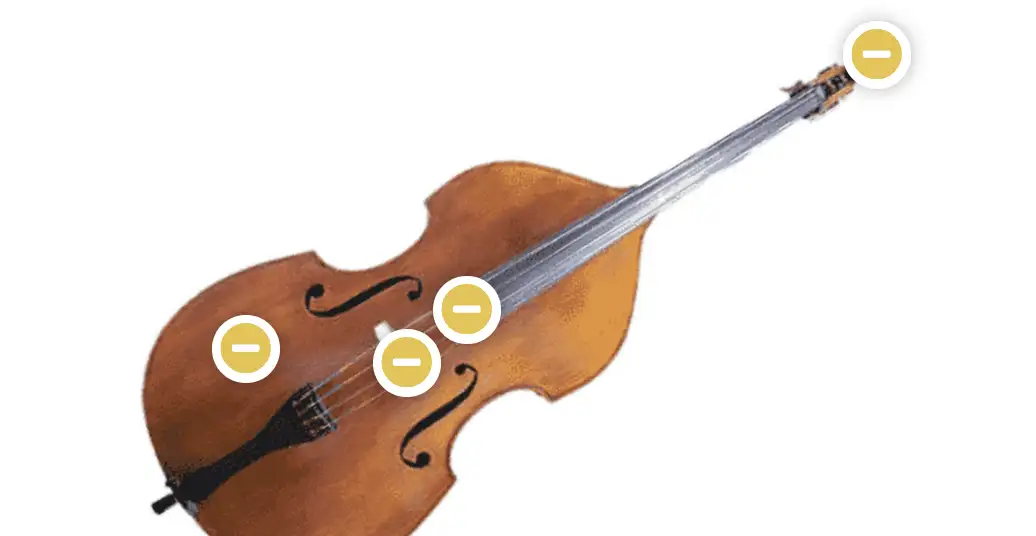
Instrument Flashcards, Hotspots and Match the Timbre
Talking about how instruments sound and work.
Families (keyboard, brass, percussion, string, woodwind) and individual instruments (cello, clarinet, drum kit, flute, guitar, keyboard, oboe, trombone, trumpet, violin) are revisited through:
- Instrument Flashcards for whole-class naming and description.
- Instrument Hotspots for exploring instrument parts and their functions.
- Match the Timbre for matching pictures and sounds, and comparing timbres in simple language.
These are especially helpful when talking about which instruments appear in Blues recordings and in the Year 2 band-focused lessons.
-
Workbooks and Professor Duncan
Recording learning when pupils are ready.
Workbooks such as Staves, Lines and Spaces; Treble Clef and Bass Clef; Treble/Bass Clef Notes; Notes and Rests; Musical Alphabet and Solfeg; Accidentals; Simple Time Signatures; Music Symbols and Musical Instruments, plus Professor Duncan Music Theory videos, give you printed and on-screen ways to:
- Model notation on the board.
- Let pupils try small written tasks at their own pace.
- Capture evidence of understanding for subject review or inspection.
They are available when you want them, rather than being a compulsory checklist for every child in every lesson.