
How Year 1 music is structured
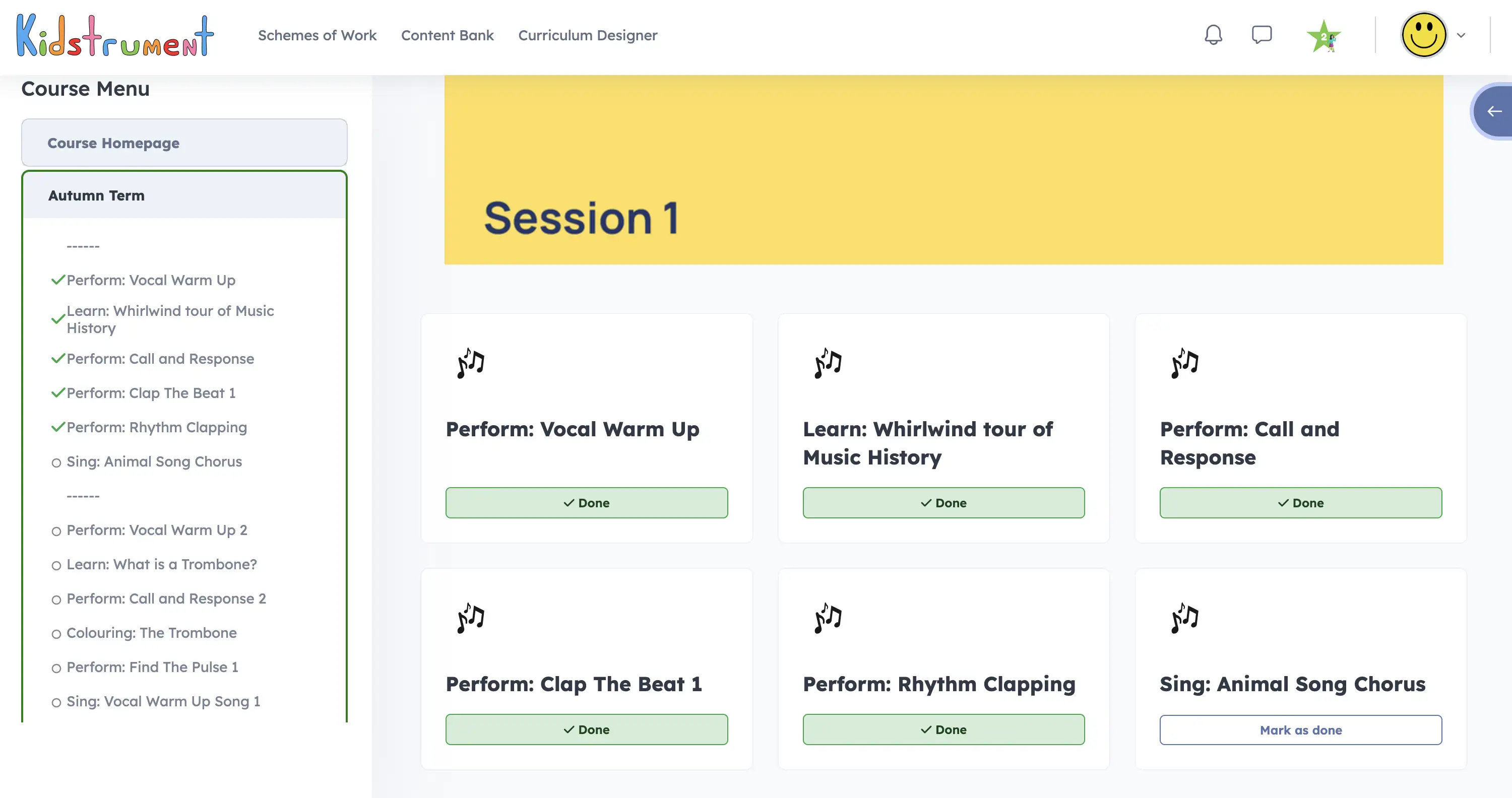
In Kidstrument, Year 1 music is taught through three terms of six sessions (18 in total). Each lesson uses around six short, classroom-ready activities, so pupils get lots of quick, focused practice rather than one long task.
The same core activity types repeat across Autumn, Spring and Summer, but with new examples and slightly increased challenge. This makes lessons easy to run, while giving pupils the repetition they need to become secure in key KS1 music skills.
Across the year, every session typically includes:
- Vocal warm-ups and call-and-response – short “switch-on” routines in the music studio where children copy back spoken and sung patterns, building confidence and control with their voices.
- Pulse and rhythm work – clapping, tapping and speaking patterns in time, moving from feeling a steady beat to tackling simple rhythm-reading challenges in the Read That Rhythm / rhythm video series.
- Listening, instruments and composers – short “Learn” segments on classical music, named composers and orchestral instruments, so pupils can talk about what they hear using simple musical vocabulary.
- Singing and pitch – songs such as Animal Party Song and graded Vocal Warm Up Songs, revisited throughout the year so pupils build a small, secure bank of music they can perform together.
You can see how this Year 1 route sits inside the wider Key Stage 1 offer on the KS1 Music Curriculum Map, which shows how Year 1 and Year 2 together meet the National Curriculum requirements for music.
Weekly lessons or shorter “bursts”
Across the school, Kidstrument sessions can be delivered as:
- Traditional lessons (for example, one 30–45 minute slot per week), or
- De-linearised “bursts” across the timetable — a song before registration, a listening game after break, a short movement or vocabulary task later in the day.
Because the curriculum is built from small, focused activities, it adapts to the reality of primary timetables while still giving you a coherent learning journey to show inspectors.
What happens across the 18 Year 1 music sessions?
This overview is designed for headteachers, music leads and subject leaders who want to see the big picture of the Year 1 music curriculum. It summarises how often each strand is revisited and how it develops from Autumn to Summer, so it’s clear how pupils make progress over the year.
Each session uses a small set of familiar activity types, but with new examples, repertoire and levels. This gives you both variety for pupils and a repeatable, easy-to-run structure for teachers.
-
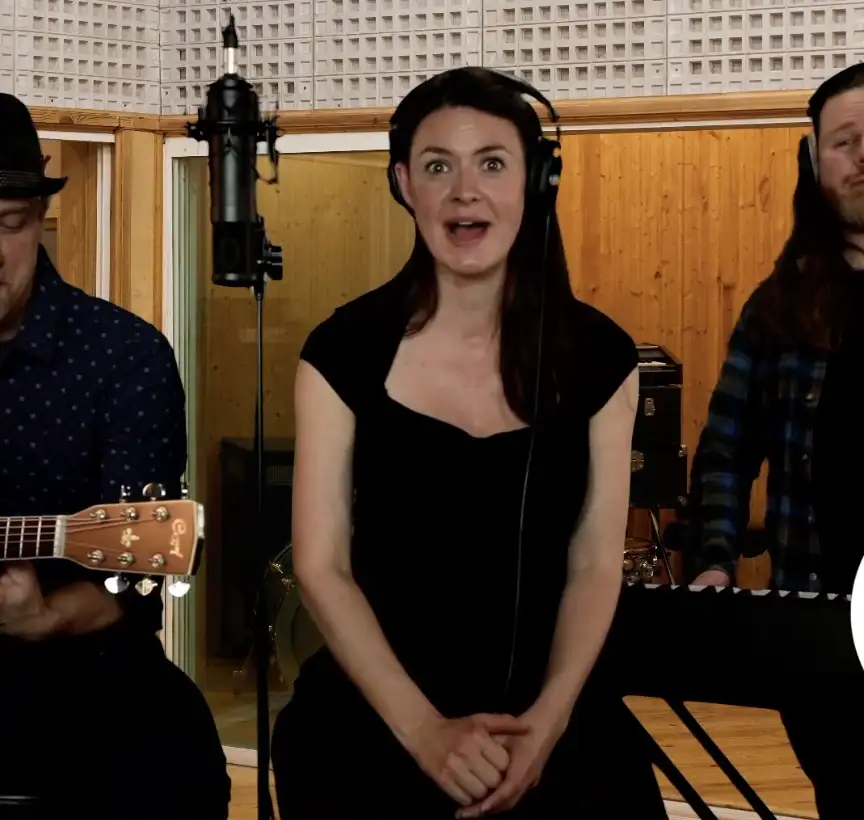
Vocal warm-ups & call-and-response
“Switch-on” routines at the start of almost every session.
Across the 18 Year 1 sessions you use Perform: Vocal Warm Up and Perform: Call and Response (versions 1–4) again and again:
- Every term begins with these familiar routines.
- Later versions add slightly longer, more complex echo patterns.
- Call-and-response gradually shifts from simple sounds to short phrases with clearer pitch and rhythm.
For staff, you can think of this as at least 18+ chances for pupils to use their voices expressively and confidently before they ever perform a full song.
-
Pulse, rhythm & rhythm-reading
From feeling the beat to reading simple patterns.
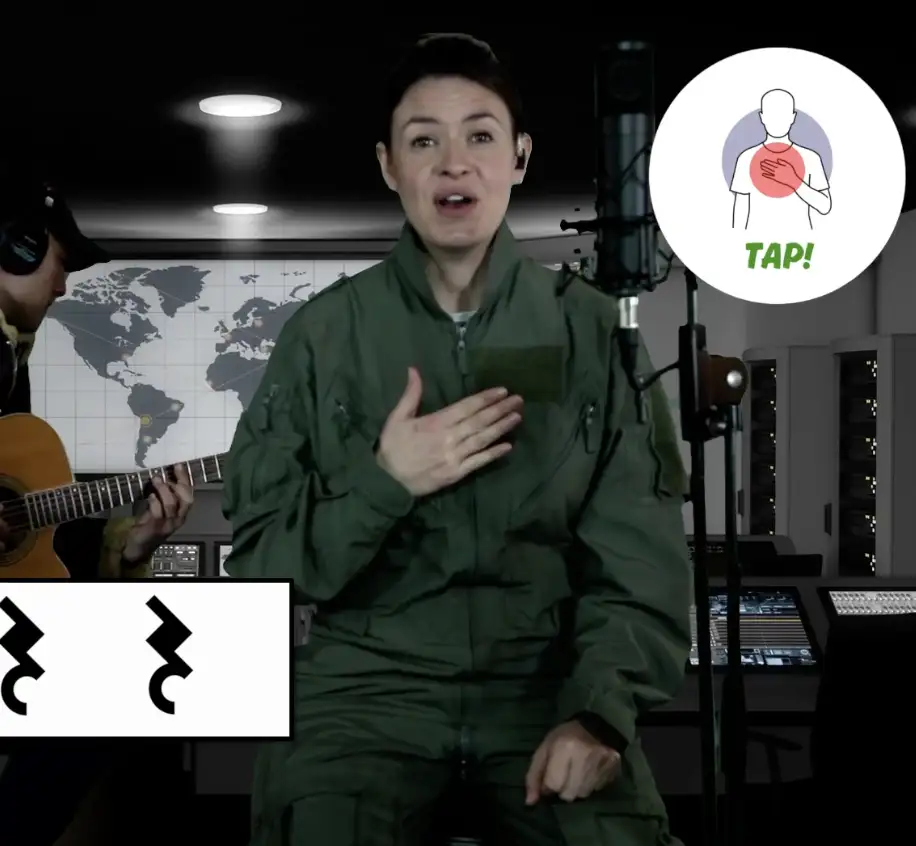
Every Year 1 music session includes some form of beat or rhythm work using activities such as:
- Clap the Beat 1–2, Clap the Pulse, Find the Pulse 1–3 and Beat the Grid to feel and show a steady count of four.
- Rhythm Clapping to practise clapping back patterns while staying aware of the underlying beat.
- The Rhythms lessons, which are progressive “levels” in the Read That Rhythm series and link to Learn Rhythm (Supermarket) .
Across the year, pupils move from clapping along to music, to copying simple spoken rhythms, to beginning to read and decode written rhythm patterns on screen.
-
Listening, instruments & composers
Classical awareness built episode by episode.
Each term includes short “Learn” segments that gradually build a classical spine:
- Autumn: Whirlwind tour of Music History and “What is…?” lessons (for example, What is a Trombone?, What is a Piano?, What is a Cello?).
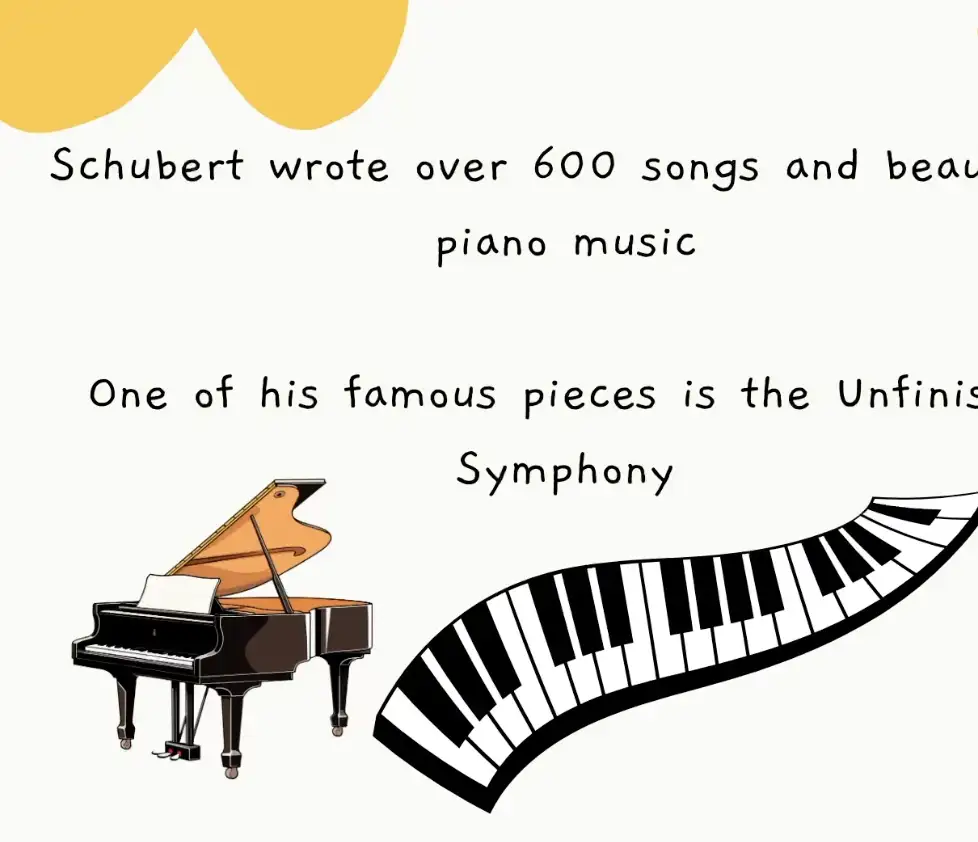
- Spring: Named composers (Mozart, Beethoven, Schubert) and What is an Orchestra?.
- Summer: Further composers (for example Chopin and Brahms) and The Journey from Classical to Blues, which sets up the Year 2 Blues focus.
Across the 18 sessions you therefore see a regular pattern of short, focused listening with clear knowledge content, supported by flashcards, hotspots and optional quizzes.
-
Singing, Animal Party Song & Vocal Warm Up Songs
A small, secure song bank revisited all year.
Every Year 1 music session ends with singing, built around:
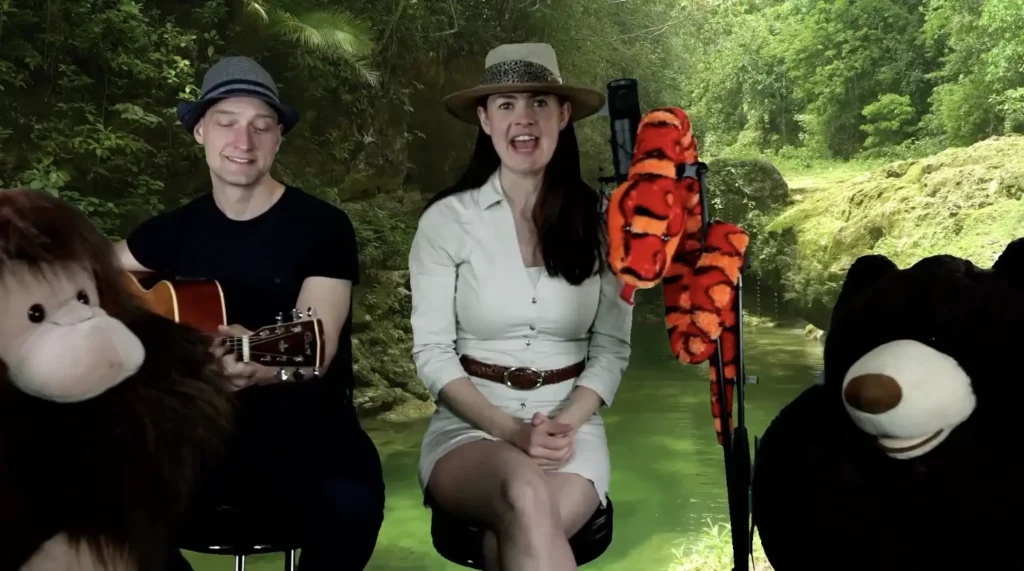
- Animal Party Song – starting with the chorus in Autumn, then moving to the full song in Spring and Summer.
- Vocal Warm Up Songs 1–4 – graded warm-up songs that explore the C major scale and simple melodic patterns.
By the end of Year 1, pupils have sung these songs many times, so they can hold a tune, remember verses and experience verse/chorus structure in a way that feels playful rather than pressured.
-
Musical “codes”, notation & simple theory
Making the jump from sound to symbol.
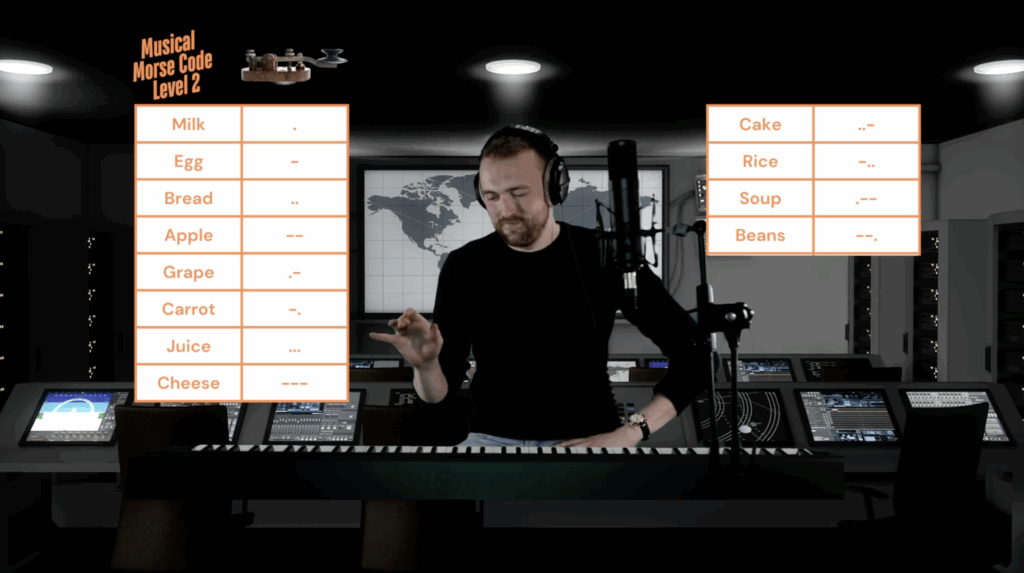
In Summer, pupils meet Musical Morse Code Level 1 and later Rhythms levels:
- Musical Morse Code Level 1 uses dots and dashes as a simple code. Pupils use the on-screen key to decode and clap rhythms.
- Later Rhythms lessons add new rhythm patterns to the same Read That Rhythm series, so children see that different symbols represent different sounds.
For teachers, this is where Year 1 begins to bridge towards formal notation. You can describe these to pupils simply as “new rhythm challenges in our rhythm video series”, rather than using technical labels.
Across the 18 sessions, a typical Year 1 music lesson uses around six short activities
in this kind of order:
1) Perform: Vocal Warm Up 2) Perform: Call and Response
(level 1–4) 3) Perform: Clap the Beat / Find the Pulse / Rhythm Clapping or
a Rhythms challenge 4) Learn: short Music History / composer / “What is…?” instrument clip
5) Sing: Animal Party Song (chorus or full song) 6) Sing:
Vocal Warm Up Song (1–4) or a quick recap game.
Individual sessions may swap one of these slots for an extra booster (for example a Find the Words or
instrument game), but overall this gives a clearly sequenced, inspectable journey and a solid musical
skill-development pathway for KS1.
Extra KS1 tools available to Year 1
These KS1 music activities are not tied to a single session in the map. They are available throughout the year as quick, repeatable tasks you can drop into lessons, assemblies or short “bursts” of music time to support the Year 1 music curriculum.
-
Find the Words KS1
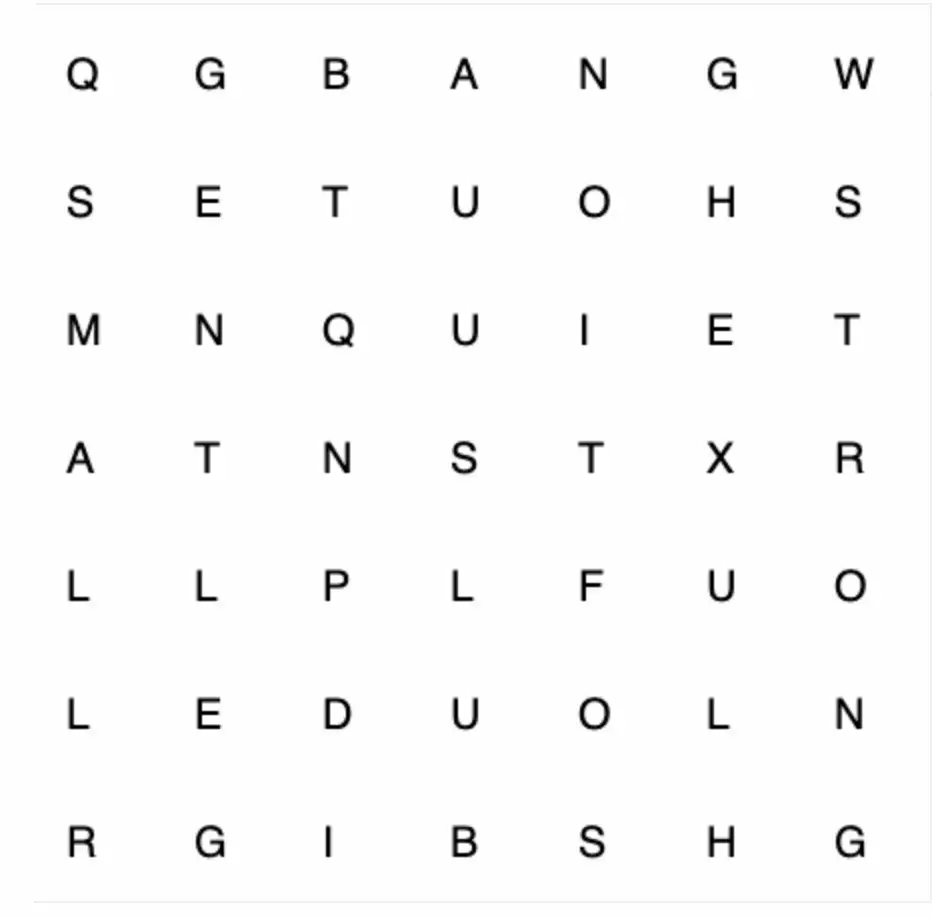
Wordsearch-style tasks for musical vocabulary.
Packs such as Class Instruments, Body Percussion, Band Instruments, Mood Words, Timbre, Tempo, Structure, Pitch, Duration and Dynamics are all variations of Find the Words. You can use them:
- As a starter or plenary to revisit vocabulary from a lesson.
- As a calm, focused task in a busy day.
- To support reading, spelling and recall of key musical words.
-
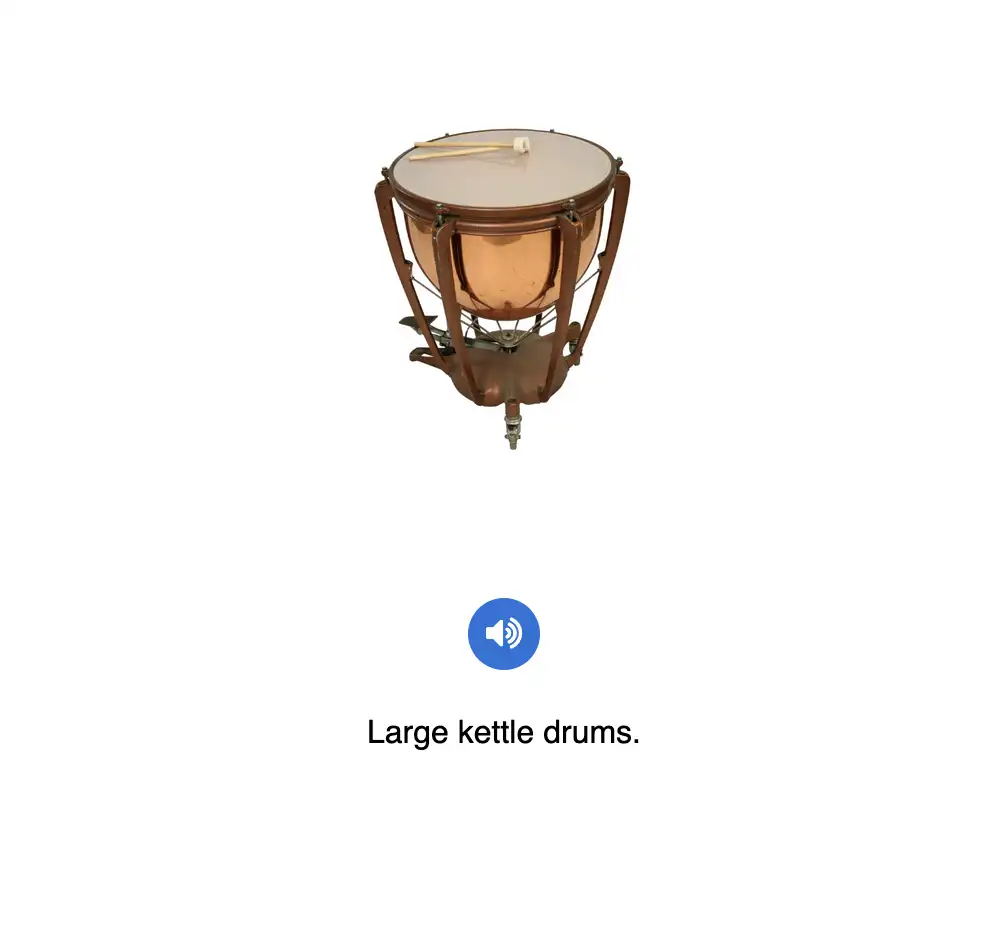
Instrument Flashcards, Hotspots and Match the Timbre
Talking about how instruments sound and work.
Families (keyboard, brass, percussion, string, woodwind) and individual instruments (for example cello, clarinet, drum kit, flute, guitar, keyboard, oboe, trombone, trumpet, violin) are revisited through:
- Instrument Flashcards for whole-class naming and description.
- Instrument Hotspots for exploring instrument parts and their functions.
- Match the Timbre for matching pictures and sounds, and comparing timbres in simple language.
-
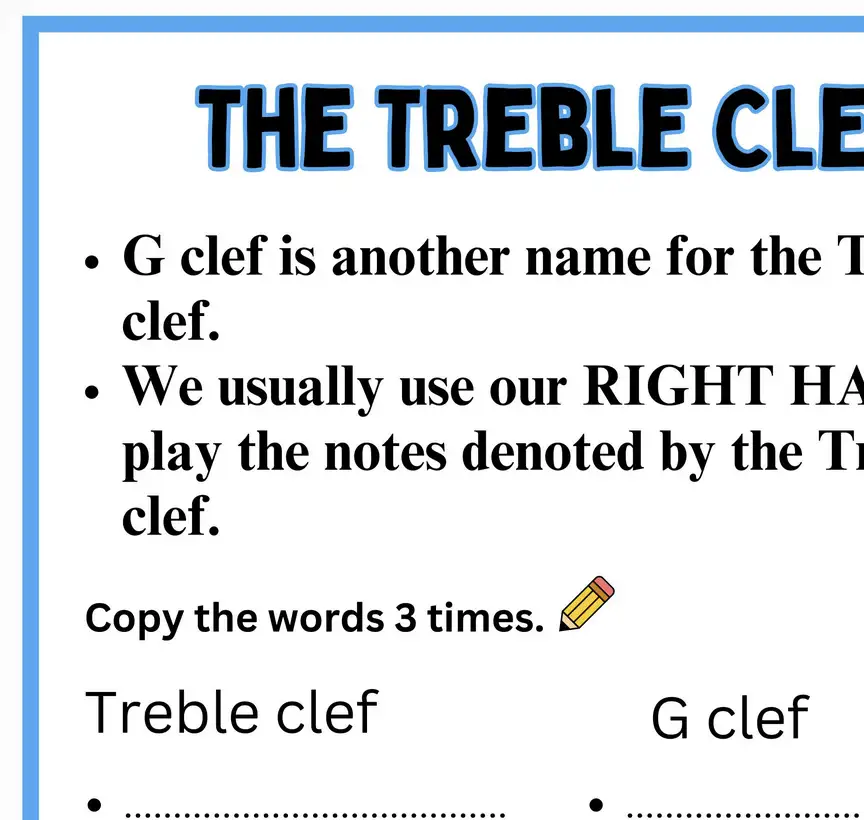
Workbooks and Professor Duncan
Recording learning when pupils are ready.
Workbooks such as Staves, Lines and Spaces; Treble Clef and Bass Clef; Treble/Bass Clef Notes; Notes and Rests; Musical Alphabet and Solfeg; Accidentals; Simple Time Signatures; Music Symbols and Musical Instruments, plus Professor Duncan Music Theory videos, give you printed and on-screen ways to:
- Model notation on the board.
- Let pupils try small written tasks at their own pace.
- Capture evidence of understanding for subject review or inspection.
They are available when you want them, rather than being a compulsory checklist for every child in every lesson.