Most KS1 lessons mix several of these activity types. Over the two years, pupils repeatedly meet them in
new contexts so skills can deepen without the interface constantly changing.
Rhythm reading, internal pulse and decoding patterns.
Read That Rhythm walks through short rhythm patterns one step at a time, adding
new notes and rests gradually. You can then randomise them to check recall and fluency, or
combine them in new orders to make short “rhythm sentences”. Beat the Grid and
Clap the Beat link this to a 4-beat bar, helping children feel how patterns fit inside a
steady count. Musical Morse Code introduces simple dot/dash codes so pupils start to see
that patterns can be represented symbolically and decoded again.
Pitch awareness, staves and note names.
Rainbow Dots and Music Gallery show how C, D, E and other notes sit on the
stave, with children placing or reading colourful “dots” and singing them back. Musical Rainbow
uses individual notes (C, then D, then E) to anchor pitch in a Blues context. Over time,
activities like What’s the Pitch?, Professor Duncan Music Theory and notation
workbooks gently extend this into reading more notes and spotting patterns on the page.
Focused listening, pitch comparison and instrument recognition.
Skies and Valleys asks pupils to decide whether notes move up or down,
encouraging very focused listening and a clear mental image of higher/lower. Critical Listening:
Musical Detective / Musical Genius turn listening into a game of spotting missing instruments.
Memory Game, Match the Timbre and Find the Family pair images, sounds and names so
children can talk about how instruments sound and what roles they play in music.
Performance, style and musical storytelling.
In Year 1, the Animal Party Song gives a structured way to sing through the C major scale
while telling a playful story. In Year 2, the focus shifts to Blues – with lessons on
What is Blues Music?, specific artists, instruments in the Blues band, and performance
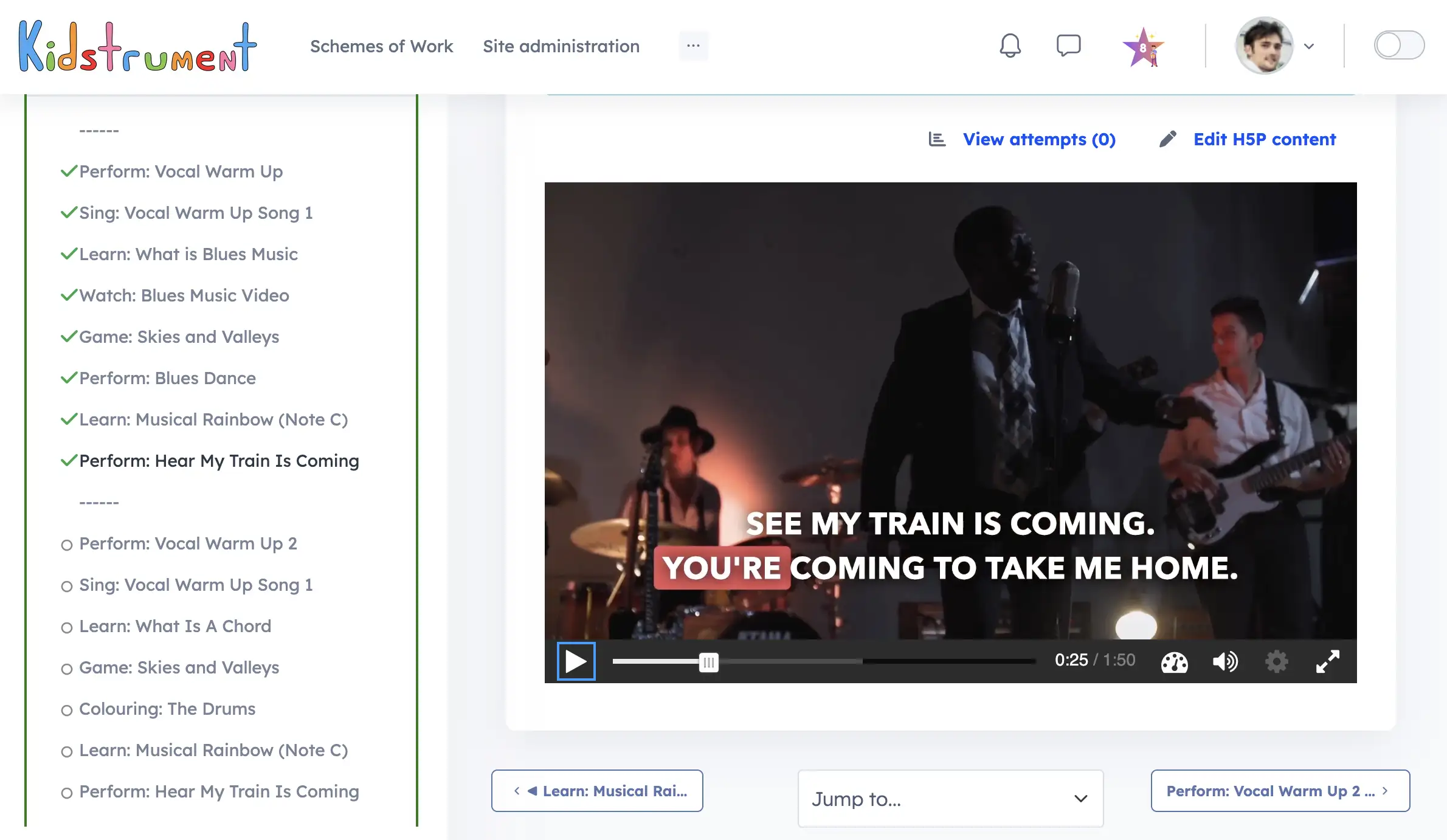
tasks like Blues Dance, Hear My Train Is Coming, Blues Karaoke and
Create your own Lyrics Blues. Music Video Performance activities show how sound, visual
style and movement all combine in a complete performance.
Vocabulary, literacy links and quiet focus.
Find the Words (for class instruments, body percussion, band instruments, mood
words, timbre, tempo, structure, pitch, duration, dynamics) and Crosswords provide short,
literacy-rich activities that can be used at any point in the year. They reinforce vocabulary in
a low-stakes way. Workbooks on staves, clefs, notes and rests, musical symbols and instruments
let children record their understanding, either as whole-class modelling or independent tasks.
Knowing instruments and how they work.
Instrument Flashcards show instruments from the keyboard, brass, percussion,
string and woodwind families and prompt class discussion about how they are played and how they
sound. Instrument Hotspots let children explore each instrument in more detail on the
whiteboard, naming parts and discussing their function. Instrument Insight by Genre ties this
to real music, explaining what each instrument does in different styles.